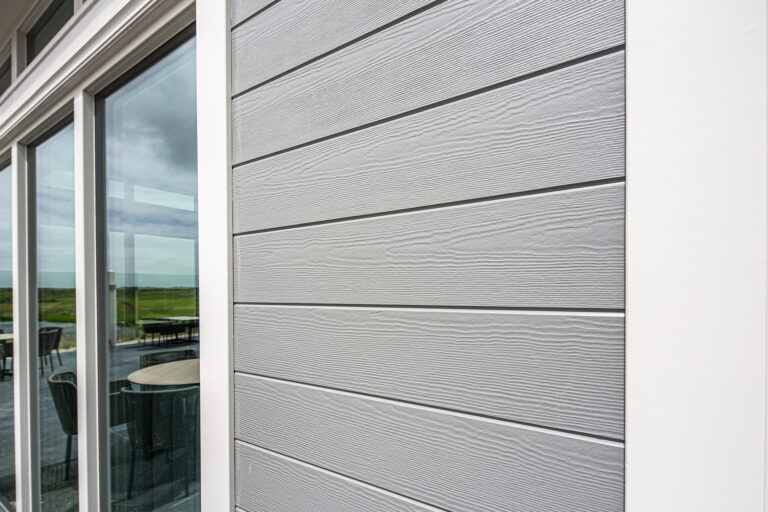
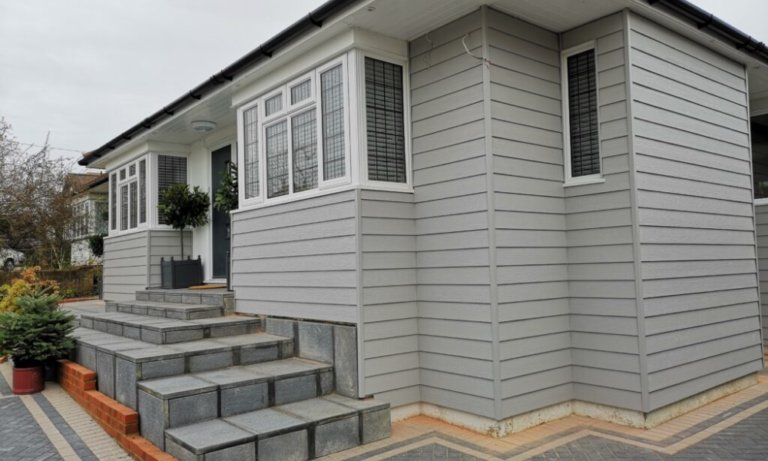
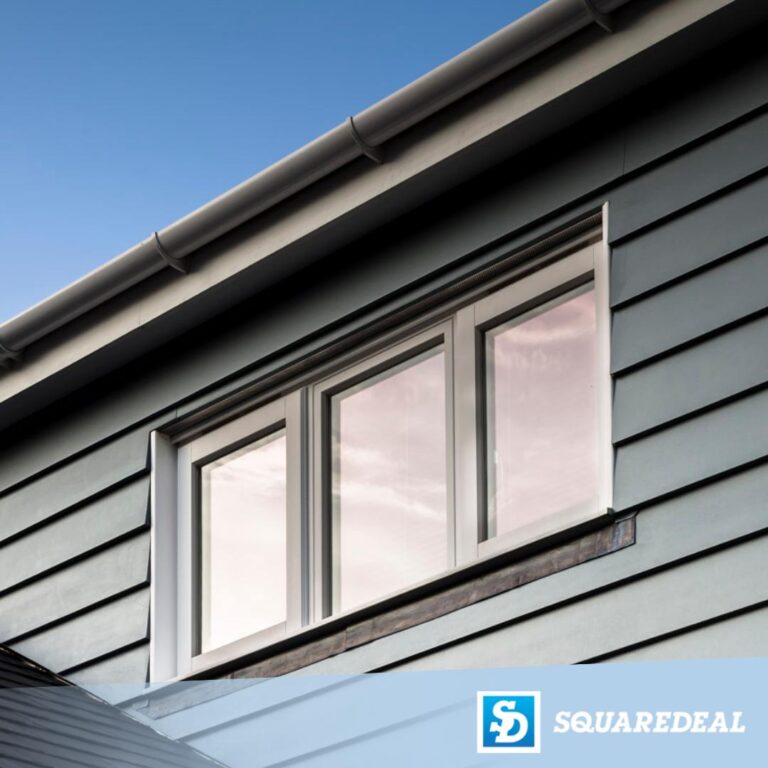
There are specific processes and tools needed to cut fibre cement cladding effectively, which is why we suggest specialist tooling is used to cut your fibre cement cladding. At Squaredeal we offer advice and supply of the correct tooling so you don’t have to worry about accurate cutting.
It is imperative to cut your fibre cement cladding accurately to ensure its durability and provide your exterior cladding with the best possible chance to protect your home against weather exposure.
Specialist assistance
At Squaredeal we recommend you have one of our specialists cut the fibre cement cladding for you. This is to ensure a clean cut using the specific instruments and methods necessary for accuracy.
Precise cutting will guarantee that your cladding panels interlock tightly, which is a crucial aspect for the framework of the exterior cladding. A tight fit will aid in correctly securing the boards avoiding weathering or damage over time.
Incorrect cutting methods could lead to gaps, uneven edges, and installation errors. Placing the longevity of the cladding structure in jeopardy. Improper installation can lead to problems for your cladding structure including water damage, drafts and instability.
Precision = Protection
The main purpose of a cladding system is to protect your home against weathering and erosion. Which is why it is essential to ensure the correct installation of James Hardie cladding by a professional.
Following the correct processes for cutting and installing exterior cladding will provide maximum weather resistance and protection against leaks and moisture damage. Therefore prolonging the lifespan of the cladding structure.
Improper cutting or installation of the cladding may cause water to seep behind the panels, due to misaligned panels or cracks that are not precisely trimmed. This level of damage will cause deterioration over time and compromise the structure of the house causing rot and mould.
Over time, misaligned or poorly cut cladding can cause panels to move or come free. Particularly in powerful gusts of wind or other extreme weather conditions, which may cause wear and tear. When cut precisely and installed correctly, you can ensure the long-term stability of the cladding which will minimise the need for future repairs.
Poorly cut cladding panels may deteriorate or move over time, particularly if exposed to extreme weather. So it is essential that you follow the correct protocols for cutting your cladding precisely and installing correctly, or hire a professional, to ensure long-term stability and minimise the need for future repairs.
If you try to cut the fibre cement material by hand, you risk dispersing dangerous dust into your surrounding area, which can cause reactions and lead to various health and environmental problems.
If you want to install James Hardie cladding on your own, follow our step-by-step guide to make sure you can cut and fit it correctly without running the danger of cutting too much off or causing injury.
The necessary equipment
Tools
- Circular Saw with a fibre cement blade (polycrystalline diamond-tipped) for straight cuts.
- Jigsaw with a carbide-tipped blade for curves or detailed cuts.
- Shears (manual, electric, or pneumatic) for dust-free straight cuts. (Or guillotine for HardiePlank.)
- Score and Snap Knife for quick, simple straight cuts on thinner boards.
- Table Saw (optional) with a fibre cement blade for larger projects or precise cuts.
PPE
- Dust Mask or Respirator: Use a mask rated for silica dust, such as an N95 or P100 respirator, to protect your lungs.
- Safety Goggles: Protect your eyes from debris.
- Hearing Protection: Power tools can be loud, so consider using ear protection.
- Gloves: Fibre cement edges can be sharp, so wear gloves to avoid cuts.
Without further ado, our step-by-step guide to cutting James Hardie fibre cement cladding
Step 1 – measure up your cladding
Begin by measuring the length or shape of the cut you need. Precision is crucial, so use a measuring tape to mark the cutting line accurately with a pencil or chalk. To ensure a straight line, use a straight edge or carpenter’s square.
Step 2 – choose the right cutting tool
Different tools are suitable for different cuts
- For straight cuts, a circular saw or manual shears (guillotine) are ideal.
- For curves or detailed cuts, a jigsaw works best.
- For quick, dust-free straight cuts, use a score-and-snap knife or shears.
Step 3 – minimise exposure to silica dust
Since cutting fibre cement can produce hazardous silica dust, it’s important to minimise exposure.
Cut outdoors when possible for better ventilation.
Attach a dust collection system: some saws come with dust collection ports. Connect a vacuum to capture the dust while cutting.
Step 4 – cutting the fibre cement
Now, it’s time to cut the board. Here’s how to approach each tool.
Using a Circular Saw:
Set the saw’s blade depth to just slightly deeper than the thickness of the cladding.
Position the board with the back (unfinished side) facing up, as this helps minimise chipping on the front, finished surface.
Steadily guide the saw along the marked line. Let the saw do the work, applying steady but not excessive pressure.
Using a Jigsaw:
Ideal for curved or detailed cuts, a jigsaw should run at a slower speed to prevent cracking the fibre cement.
Carefully guide the jigsaw along the marked curve, maintaining control throughout the cut.
Using Shears:
Place the shears at the marked cut line, applying steady pressure. Shears are perfect for dust-free, straight cuts and are easy to use.
Using a Score-and-Snap Knife:
Score the surface of the cladding along the cut line with a carbide-tipped scoring knife.
Snap the board along the scored line by applying pressure at the edge of a workbench.
Step 5 – inspect the cut
After cutting, inspect the edges. If they’re rough, lightly sand them with a sanding block to smooth any jagged areas. This step ensures a clean, professional look, especially for exposed edges.
Conclusion
We hope you will find this guide useful if you intend to cut and fit your fibre cement cladding yourself. However, for a truly durable installation of James Hardie cladding we’d always recommend professional installation by one of our specialists.James Hardie has developed a remarkable, low maintenance, weather-resistant product in their fibre cement cladding. So to ensure peace of mind, proper installation, and cladding that protects your home for many years to come, please feel free to contact us.